
TL;DR
A durable outdoor LED scoreboard should have suitable weather protection, reliable construction, effective temperature management, and accessible components for maintenance. Comparing these features alongside installation requirements and warranty coverage can help you make a more informed purchase.
Key Takeaways
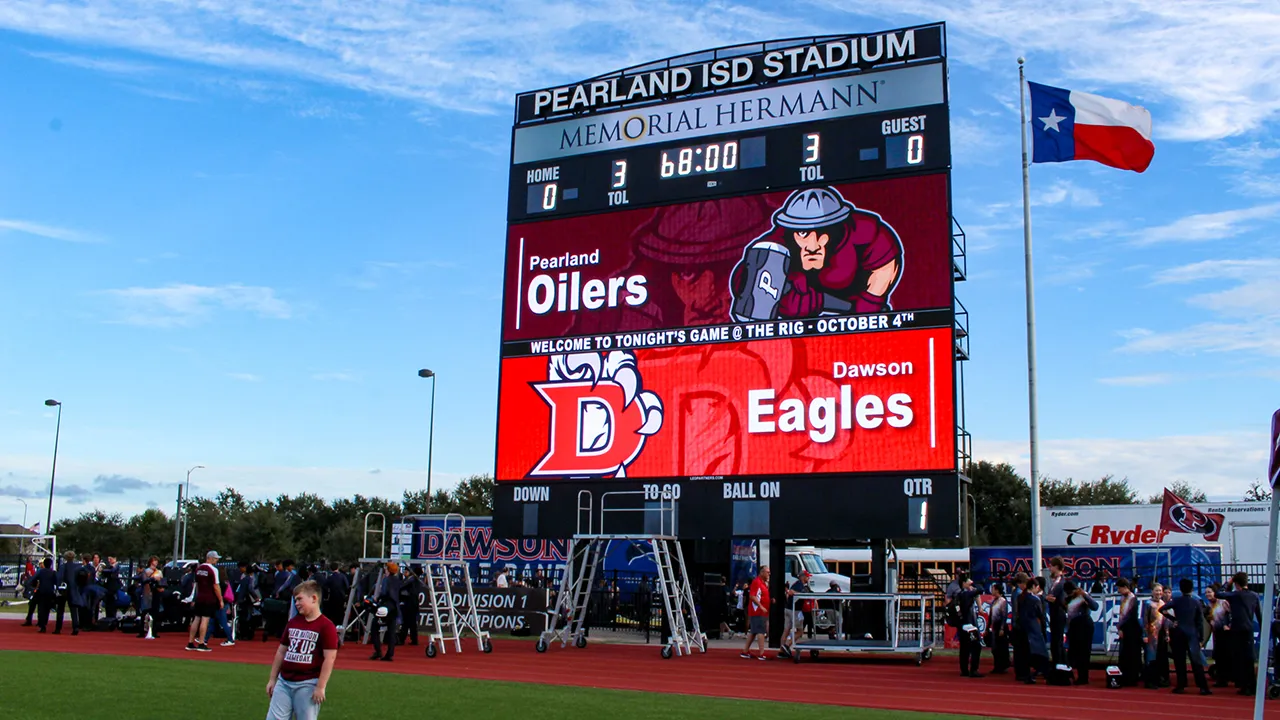
An outdoor LED scoreboard is a significant investment for any sports facility. Whether you’re upgrading a high school football field, building a community sports complex, or improving a stadium, you need a display that can withstand outdoor conditions while keeping spectators informed.
Not all scoreboards are built to handle the same conditions, so it’s important to check their weather resistance, construction, brightness, and maintenance needs. Knowing what to look for can help you find a reliable scoreboard without spending more on repairs down the road.
Outdoor scoreboards deal with rain, heat, dust, and changing weather throughout the year. Without proper protection, these conditions can affect how well the display works and shorten its lifespan.
For schools, stadiums, and sports facilities, a damaged scoreboard can interrupt games and lead to costly repairs. Choosing a durable model helps keep games running smoothly while reducing maintenance expenses over time.
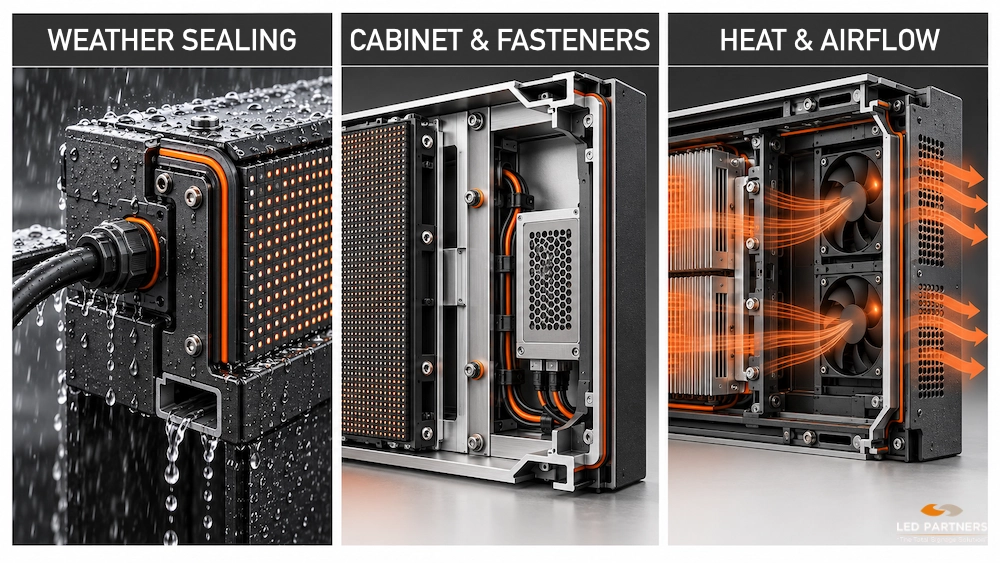
Weather protection should be one of your first considerations when comparing outdoor LED scoreboards. Since these displays are exposed to rain, moisture, and airborne particles, their enclosures need appropriate protection.
An Ingress Protection (IP) rating describes how effectively an enclosure prevents dust and water from entering. IP65 is a common rating associated with outdoor LED equipment. The first digit indicates dust-tight protection, while the second indicates resistance to water jets.
However, IP65 doesn’t mean the scoreboard is completely waterproof under every condition. Different components may have different protection ratings, particularly when the front and rear of the cabinet have separate designs.
Beyond the IP rating, examine how the enclosure protects its internal electronics.
Important features include:
These features are especially important for venues that experience heavy rainfall or prolonged humidity.
The cabinet provides structural support and protects the LED modules, power supplies, and control equipment. Its materials and design influence the scoreboard’s weight, corrosion resistance, and maintenance requirements.
Aluminum and steel are common materials for outdoor LED scoreboard cabinets. Aluminum is lighter and naturally resists corrosion, while steel is heavier and often requires protective coatings to prevent rust.
Both can work well depending on the scoreboard’s design and installation needs. For venues in coastal or humid areas, pay close attention to corrosion-resistant finishes, fasteners, and overall construction quality.
Large scoreboards have substantial surface areas, making wind loads an important engineering consideration. A durable scoreboard needs more than a strong cabinet. Its mounting structure and connections must also be designed for the installation site.
Ask whether the proposed structure meets applicable local engineering requirements and accounts for the wind conditions at your facility.
Durability isn’t limited to protecting the scoreboard from physical damage. The display must also remain readable throughout its operating life.
An outdoor LED scoreboard that looks clear during evening games might be difficult to read under direct afternoon sunlight if its brightness is insufficient.
Outdoor LED scoreboards typically need several thousand nits of brightness for daytime visibility. The right level depends on sunlight, glare, screen placement, and viewing distance.
Look for automatic brightness adjustment, which helps the display stay readable during the day and comfortable to view at night.
Pixel pitch is the distance between LED pixels and affects how clearly images appear. Smaller pixel pitches provide sharper details up close, while larger pitches generally work well for spectators sitting farther away.
When choosing an outdoor LED scoreboard, consider your audience’s viewing distance and the content you’ll display. Basic scores and timers may need less detail than video replays, animations, and sponsor advertisements.
Outdoor LED scoreboards must handle changing temperatures, especially during hot summer months. Excessive heat can affect LED modules and other electronic components, potentially shortening their lifespan.
Outdoor scoreboards may use ventilation, fans, or heat-dissipating designs to manage heat. Before buying, check the manufacturer’s operating temperature limits and cooling features.
This is especially important in Houston and other parts of Texas, where high summer temperatures can put extra strain on outdoor displays.
A strong enclosure is important, but the electronic components inside also influence durability. LED modules, control equipment, and power supplies should be designed for the expected operating conditions and usage requirements.
When comparing LED scoreboards, check their expected lifespan, brightness consistency, and whether replacement modules will be available. Remember that LED lifetime ratings don’t guarantee how long the entire scoreboard will last, since other components may wear out sooner.
Outdoor scoreboard systems also need appropriate electrical protection. Surge protection, grounding, dependable power supplies, and protected wiring connections can help reduce the risk of electrical damage.
Ask your supplier about recommended electrical safeguards, particularly if your venue experiences frequent thunderstorms or power fluctuations.
Even a durable outdoor LED scoreboard will eventually need maintenance. Choosing a service-friendly design can make repairs simpler and help reduce downtime.
Some scoreboards offer front-service access, allowing technicians to remove modules from the display face. Others require access from behind the cabinet.
Choose a service design that fits your installation:
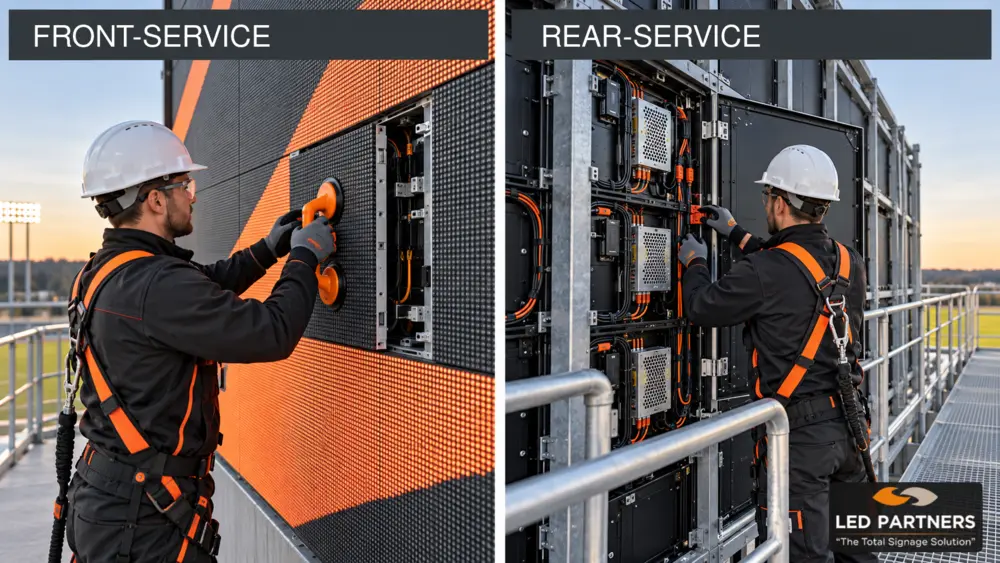
Before buying, check how modules are replaced, whether special equipment is needed, and what spare parts and technical support are available.
Different sports facilities have different performance requirements. A scoreboard designed for a school athletic field may not need the same capabilities as a large stadium video display.
Schools often need scoreboards that provide readable game information, straightforward controls, and dependable performance during seasonal sporting events. For multipurpose athletic fields, consider whether the system can accommodate different sports and scoring formats.
Larger stadiums may require high-brightness LED video scoreboards capable of displaying scores, live video, animations, and sponsor content. These systems typically involve more extensive structural planning, control equipment, and maintenance considerations.
Community sports complexes often host different leagues, tournaments, and events, so they need a scoreboard that can handle multiple uses. Choose a durable, easy-to-maintain display that suits your facility’s viewing distances and future needs.
Even a quality scoreboard can run into problems if its mounting, wiring, or weatherproofing isn’t handled properly. Before buying, confirm who will manage permits, installation, and system testing to avoid issues later.
Warranty terms can vary between manufacturers and suppliers, so compare the details rather than focusing only on the advertised warranty period.
Look for information about:
Understanding these terms helps you assess the actual cost of ownership and the support available after installation.
Before choosing an outdoor LED scoreboard, check its weather resistance, cabinet materials, and structural strength. Make sure it can handle your local weather conditions and provides enough brightness for spectators to see the display clearly during games.
It’s also worth looking at cooling systems, LED component quality, and how easily the scoreboard can be serviced. Ask for written specifications and review the warranty and support options so you know what to expect after installation.
At LED Partners, we work with schools, stadiums, and sports facilities to find LED scoreboards that suit their needs. We take the time to understand your venue, from its layout and viewing distances to local weather conditions and budget, so we can recommend a display that makes sense for your space.
We’re also here to help beyond choosing a scoreboard. We assist with installation planning, system setup, and technical support to make the process easier from start to finish.
Your scoreboard should be ready for game day, not become another maintenance concern. Choosing the right system now can help you avoid visibility problems, unnecessary repairs, and costly installation changes later.
At LED Partners, we’ll help you compare suitable display options, understand your installation requirements, and plan a scoreboard that fits your venue and budget.
Contact LED Partners today to discuss your project and request a customized quote.