
TLDR: Choosing the right LED scoreboard isn’t just about size or visuals. It’s about matching the system to your venue, sports, and operational needs. Schools that plan for visibility, usability, and long-term support will get far more value from their investment.
Key Takeaways
A new LED scoreboard can transform a school athletic facility, but only when it fits the venue, the sports being played, and the people operating it. While size and graphics may stand at first, long-term success depends on visibility, ease of use, and the ability to support the school’s evolving needs.
Before reaching out quotes, schools should take time to define what they want the scoreboard to accomplish. The right system should clearly display game information, enhance the game-day experience, support sponsorship opportunities, and remain easy to manage long after installation.
Every facility is different, and your scoreboard should reflect that. What works in a small gym won’t necessarily work in a football stadium or a multi-use athletic complex. That’s why the first step isn’t picking a product. It understands your space.
Ask:
These details shape everything from your scoreboard’s size and brightness to its resolution and mounting. It’s easy to be swayed by what looks good in a brochure or what another school installed, but the best choice is one designed specifically for your layout, audience, and goals.
At its core, a scoreboard has one job: clearly communicate game information. Depending on the sport, this may include score, game clock, period or inning, possession, fouls, timeouts, down and distance, ball position, pitch count, and shot clock.
Each sport has unique requirements, so scoreboards must be designed accordingly, especially for facilities that host multiple sports or events. Rather than adding excessive features that can clutter to the display, focus on ensuring essential information is clear, readable, and immediately accessible to everyone.
Bigger isn’t always better when it comes to scoreboards. The goal is simple: make sure everyone can read it comfortably by choosing a size that fits your space.
Consider:
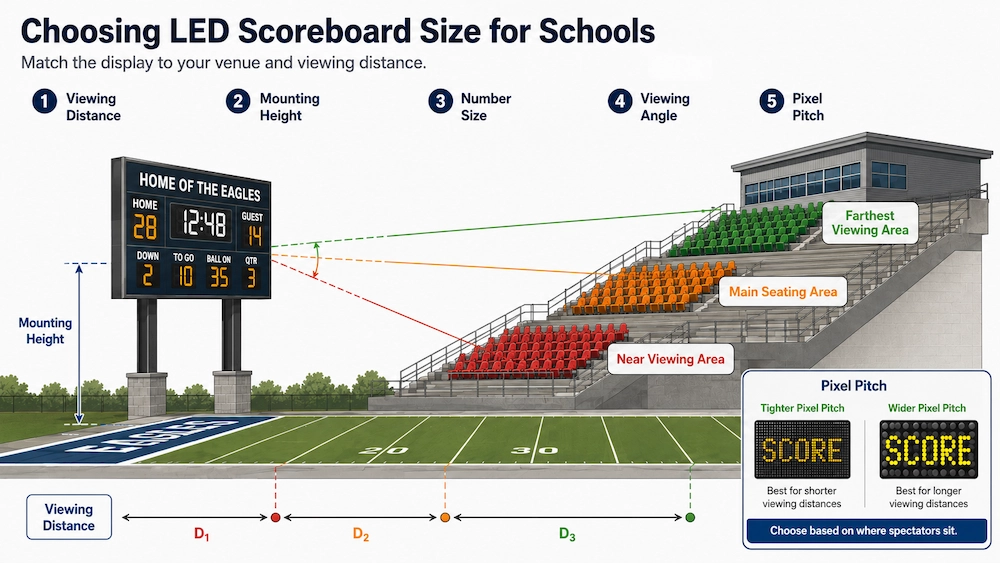
For video scoreboards, pixel pitch also matters. Tighter spacing creates sharper images, but from a distance, most viewers won’t notice much difference. The key is balancing clarity and cost, so you’re not paying for detail that won’t be seen.
Where your scoreboard is installed directly affects how it needs to perform. Outdoor systems must withstand harsh weather and bright sunlight, while indoor boards need to account for lighting, glare, and potential impact from sports equipment.
For schools with gymnasiums or indoor arenas, exploring purpose-built solutions like indoor video scoreboards can help ensure the display is optimized for controlled lighting environments, tighter viewing distances, and multi-use event flexibility.
The display gets all the attention, but the control system matters just as much. During a game, someone has to update the score and clock in real time, and if the system is too complicated, it can lead to mistakes and unnecessary stress for whoever’s running it.
Ask:
The best system isn’t the one with the most features—it’s the one that works reliably when it matters most. Advanced video boards can do a lot, but those features only matter if your team actually has the time and resources to use them, so choose something that fits your capabilities, not just your ambitions.
A modern LED scoreboard can do more than keep score—it can also help generate revenue. Digital displays make it easy to showcase sponsors, promote local businesses, support fundraising efforts, and rotate multiple sponsors throughout a game or event.
Common uses include:
That said, it’s important to plan how this content will be managed. The scoreboard still needs to clearly display game information first.
You’ll also want to think about who will handle sponsorship sales, content creation, scheduling, and reporting. The technology opens the door, but the school still needs a process to make it work.
The cost of the display itself is only part of the project, as installation can involve structural work, electrical upgrades, mounting systems, permits, and more. Outdoor projects may also require foundations, trenching, or coordination with existing facilities.
Before moving forward, make sure you understand:
A lower upfront quote doesn’t always mean a lower total cost, as missing pieces can add up quickly. Working with a team that handles planning, installation, and coordination can help avoid surprises and keep the project on track.
Every scoreboard will need service at some point. It’s just part of owning electronic equipment. Parts wear out, software can act up, and outdoor systems deal with weather year-round.
Before choosing a provider, it helps to ask a few key questions:
Issues tend to show up at the worst times, like during a game, so it’s important to know who to call and how quickly they can help.
A scoreboard is a long-term investment, so it’s worth thinking ahead. Your needs today might not be the same in a few years. You might want to add features like:
You don’t need everything right away, but choosing a system that can grow with you can save time and money later. At the same time, avoid overbuying. Pick something that fits your current setup while still leaving room for the future.
Budget matters, but the lowest price isn’t always the best choice. When comparing options, look at the full picture:
Make sure each proposal clearly outlines what’s included and what’s not. Two scoreboards might look similar on paper but differ significantly in quality, reliability, support, and overall system performance.
LED Partners work closely with schools, districts, and athletic facilities to deliver LED scoreboard solutions that fit their needs. Instead of pushing a standard package, we take time to understand your venue, your sports programs, and how your staff will use the system day to day.
We support projects from planning and installation to training, content support, and long-term maintenance, ensuring your system performs reliably over time. Schools can also visit our Houston showroom to explore display options in person, with solutions designed to be practical, durable, and ready for future growth.
Instead of choosing based on size or appearance alone, take the time to think through your facility, your audience, and your long-term goals. Then partner with a team that can guide you through the entire process, from planning to installation to ongoing support.