
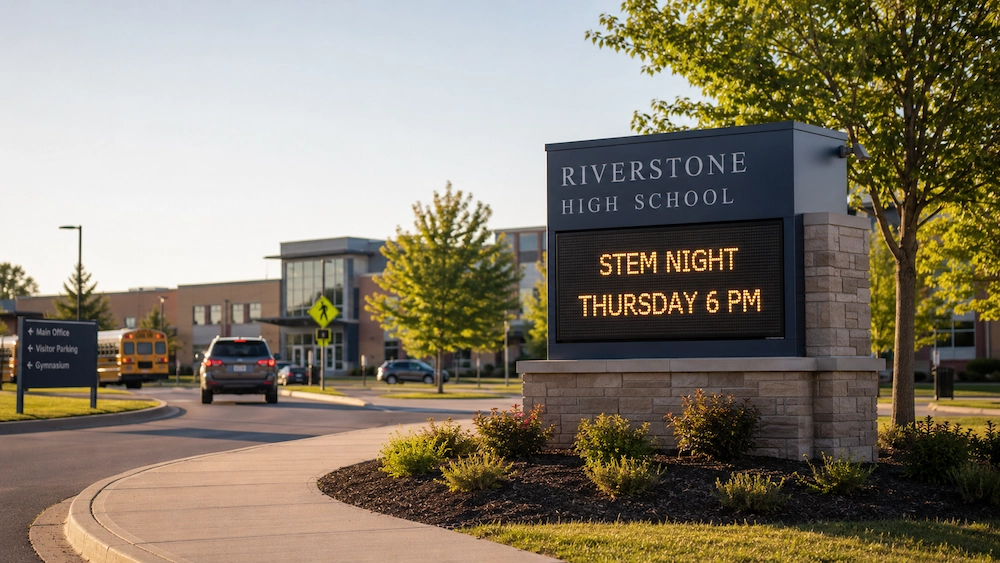
TLDR: Outdoor LED signs can do far more than display basic school announcements—they can improve safety, communication, and community engagement when used strategically. With thoughtful planning, schools can turn these displays into powerful tools that support daily operations and long-term goals.
Key Takeaways:
An outdoor LED sign is often seen as a modern upgrade to the traditional school marquee. It can handle reminders, closures, and event notices, but using it only for basic announcements means missing out on what it can really do. With a bit of planning, a school LED sign can support safety, highlight achievements, improve traffic flow, promote enrollment, and keep families and the community better connected.
The key is how it’s used, as schools can move beyond a simple noticeboard and treat it as a flexible communication tool that adapts to daily needs. LED Partners describes these signs as easy-to-update systems for event updates, emergency alerts, student recognition, athletics, and community messages, and schools can explore specifications and configurations on the outdoor LED signs product page.
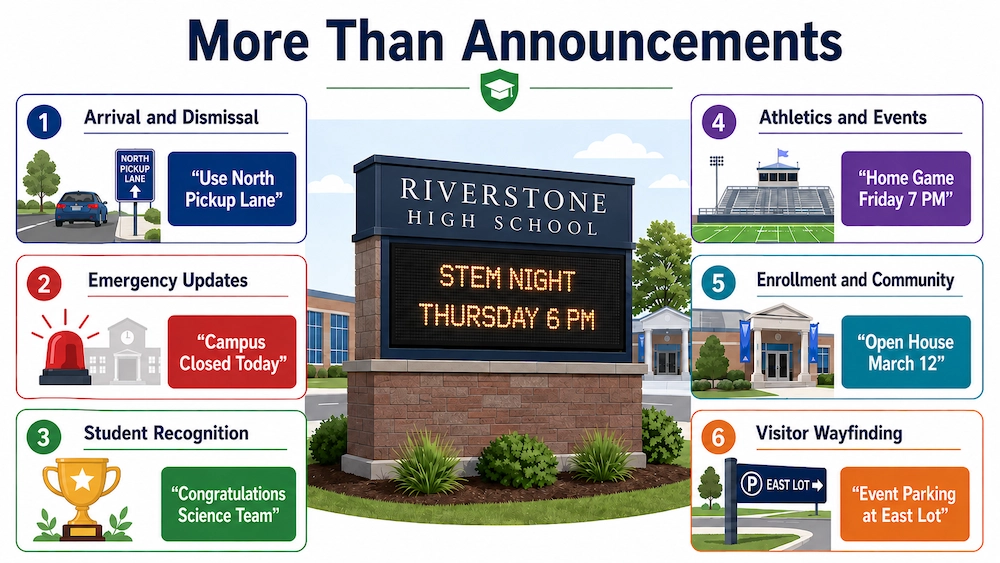
Emergency communication is one of the most valuable uses of digital signage. If severe weather, a utility issue, or a nearby road closure affects campus access, an outdoor display can reinforce official instructions right at the entrance.
LED Partners recommends planning for emergency messaging from the start. Schools should decide who can publish alerts, how regular content will be paused, and what preapproved messages will be ready to use.
An LED sign should work alongside the school’s existing communication tools, not replace them. Text alerts, phone calls, emails, public address systems, and directions from emergency services are still essential. The sign simply adds another visible layer of communication for people arriving at or passing by the campus.
Having prepared templates can make a big difference. Messages like “Campus Closed,” “Use Alternate Entrance,” or “Event Relocated to Main Gym” can be reviewed ahead of time and activated quickly when needed.
Recognition feels more meaningful when it is shared beyond the classroom or assembly hall. Outdoor LED signs can highlight academic success, attendance milestones, competition results, staff contributions, student leadership, and positive actions within the school community.
A rotating recognition schedule can give different departments and grade levels a chance to share updates, featuring a debate team for one week and a science award for the next. It can also highlight retiring staff members or student-led projects while respecting privacy by following consent policies and focusing on groups or achievements when needed.
Many school programs compete for attention across emails, newsletters, and social media. An outdoor LED sign can help by offering quick reminders about tutoring sessions, testing dates, career nights, scholarship workshops, arts programs, clubs, and application deadlines.
The goal is not to fit every detail onto the screen but to spark interest and guide people toward the next step, using clear messages like “STEM Night Thursday, Register Online” instead of crowded slides. Timing also matters, so promoting a breakfast program during morning arrival and highlighting after-school tutoring before dismissal helps match messages to daily routines and makes them more relevant.
School athletics provide a steady stream of content throughout the year, and outdoor LED signs can promote upcoming games, celebrate wins, share playoff details, recognize coaches, and build excitement for home events. They can also highlight activities that often receive less attention, such as swimming, track, volleyball, band, robotics, theater, and academic competitions.
LED Partners offers solutions that include outdoor signs, digital marquees, scoreboards, video walls, and athletics displays, supporting sponsor recognition, game-day updates, graduation events, assemblies, and other campus activities. The most effective messages are timely and specific, giving people a clear reason to attend, while general messages still have a place but should not remain on the screen for too long without updates.
A school sign is seen by more than just current families. Prospective parents, nearby residents, former students, and local organizations may pass by every day.
This makes the display useful for promoting open houses, enrollment periods, campus tours, public meetings, adult education programs, facility rentals, and community events. It can also help explain what is happening when large events bring extra traffic to the area.
Messages aimed at a wider community should be easy to understand. Avoid using internal terms or acronyms that may confuse people. Instead, use clear wording such as “Kindergarten Open House, March 12” or “Community Blood Drive, Saturday.”
Events like concerts, plays, fairs, parent nights, book drives, auctions, and fundraisers benefit from repeated visibility. An LED sign keeps these activities in front of families without relying only on flyers or social media.
The messaging can evolve as the event approaches, with early messages introducing the event, later ones highlighting the date and booking details, and same-day messages providing directions or updates. For fundraising, clarity is important, so messages should explain the purpose when possible and conclude with a simple thank-you after the event to show appreciation and close the loop.
Regular signage may work well during a typical school day but fall short during graduations, tournaments, performances, testing sessions, or community events.
An outdoor LED sign can help direct visitors to the correct entrance, parking area, gym, auditorium, or check-in location.
Placement plays a major role in effectiveness. If drivers see the sign after passing the correct turn, it cannot help them. LED Partners recommends considering viewing distance, traffic speed, sunlight, mounting conditions, local regulations, and service access before installation.
For larger events, the LED sign should work alongside permanent signs, staff guidance, maps, and temporary markers.
Entrance to a school shapes first impressions. A well-designed monument sign with an integrated LED display can present school colors, the official name, and changing messages in a cohesive way.
Consistency matters more than flashy visuals, so templates should use clear fonts, approved colors, simple animations, and a structured layout to keep messages easy to read. Schools should also focus outdoor sign content on information relevant to people approaching the campus, while sharing internal reminders or detailed notices through other channels.
A successful LED sign needs a simple and reliable process. Assign responsibilities to specific roles instead of relying on one person. Create templates, define how messages are requested, set deadlines, and remove outdated content regularly.
A weekly plan might include school updates, student recognition, athletics, academic opportunities, and one community message, while emergency content should follow a separate approval process. Schools can also gather informal feedback, such as whether parents mention the sign; events are better attended, or fewer questions are asked, to help improve future messaging without complex tracking.
LED Partners works with schools, districts, universities, and athletic facilities to deliver outdoor LED signs, digital marquees, scoreboards, video walls, and campus display systems. We handle everything from planning and site evaluation to installation, software setup, staff training, and ongoing support, including maintenance and repairs.
That kind of support makes a real difference because the screen itself is only part of the equation. Things like placement, power, brightness, readability, and how easily staff can manage content all affect how useful the sign will be day to day. Working with an experienced provider helps ensure the sign is set up properly and continues to serve the school well over time.
An outdoor LED sign can do much more than display the next meeting date. With clear goals and a simple content plan, it can improve safety, highlight achievements, boost event participation, guide visitors, and strengthen connections within the school community.