
TL;DR
A successful LED sign does more than attract attention; it encourages customers to visit, inquire, or make a purchase. Tracking these actions helps businesses measure LED sign effectiveness and make better advertising decisions.
Key Takeaways
Your LED sign may be catching people’s attention, but is it actually bringing more customers through your doors? A bright, attractive display can help your business stand out, but that doesn’t always mean it’s generating more visits or sales.
Tracking LED sign effectiveness helps you understand whether your investment is paying off. By monitoring customer visits, inquiries, and sales, you can see what’s working and make smarter decisions about your advertising.
A bright LED sign can catch the attention of passing customers, but visibility alone doesn’t guarantee more business. Measuring LED sign effectiveness means tracking whether that attention leads to store visits, inquiries, or actual purchases.
Success depends on your goals, whether that’s increasing retail sales, booking more appointments, or encouraging event attendance. By tracking the results that matter to your organization, you can see whether your sign is working or needs improvement.
First, decide what your LED sign should achieve: more visits, sales, inquiries, or event attendance. Set a clear target, such as increasing weekday sales by 10%, and compare results across similar periods to see whether your advertising is making a difference.
You don’t need expensive software to measure your LED sign’s performance, just sales records, booking data, and customer feedback. These five simple methods can help you see whether your sign is bringing in customers.

Track your usual customer visits, then compare them with traffic during your LED advertising campaign. For example, a coffee shop could use sales records or door counters to see whether an afternoon drink special attracts more customers.
Compare similar days and operating hours to get a clearer picture of the results. This helps you determine whether your sign is bringing in more visitors or if other factors are affecting customer traffic.
Give customers a reason to respond to your LED sign by displaying an exclusive offer, such as “Mention SIGN10 for 10% Off.” Every redemption helps you track how many people are responding to your promotion.
Discounts aren’t your only option, as special bundles or complimentary consultations can also encourage customers to take action. Track the responses and compare the resulting sales or profit with your promotional costs.
One of the easiest ways to find out whether your sign is working is to ask customers how they heard about you. Have your staff record their answers, including mentions of your LED sign, during visits or appointments.
Some customers may have noticed your sign while driving by, while others found you online or through recommendations. Although their answers won’t tell the whole story, tracking them regularly can help you understand what’s bringing people in.
Not everyone visits immediately after seeing your LED sign, as some customers prefer to look up your business first. Display a short website address linking to a dedicated landing page, or use a QR code for signs viewed by nearby pedestrians.
Tools like Google Analytics can help track visits from properly configured campaign links, while branded searches and online inquiries offer additional clues. These results don’t necessarily prove your sign drove the traffic, so consider them alongside customer feedback.
Check whether your LED promotions lead to more purchases, appointments, or event registrations. Compare results with previous periods to see if customer interest is turning into meaningful action.
To find out whether your LED sign is worth the investment, compare the additional profit it generates with your installation and operating costs. Calculate your LED sign ROI by subtracting those costs from the added gross profit, dividing by total signage costs, and multiplying by 100.
For example, a $13,000 sign generating $15,000 in additional gross profit would deliver approximately 15.4% first-year ROI. Actual returns vary depending on business performance, operating expenses, and how much of the additional profit can reasonably be credited to the sign.
Disappointing numbers don’t automatically mean your LED sign was a poor investment. Sometimes the issue is the message, timing, or how easily people can read the content. Before considering major changes, review these areas.
People passing your business have only seconds to read your sign, so keep your message short and focused. Use clear offers like “Lunch Specials Starting at $9.99,” readable fonts, strong contrast, and a simple call to action.
Show promotions when customers are most likely to need them, such as breakfast deals in the morning or retail specials before the weekend. Matching your messages to customer habits can make your LED sign more effective without changing the equipment.
Make sure your LED sign is easy to see and read, even in bright daylight, and isn’t blocked by nearby objects. Check for dim spots, blank sections, or outdated messages, and fix any issues before measuring its performance.
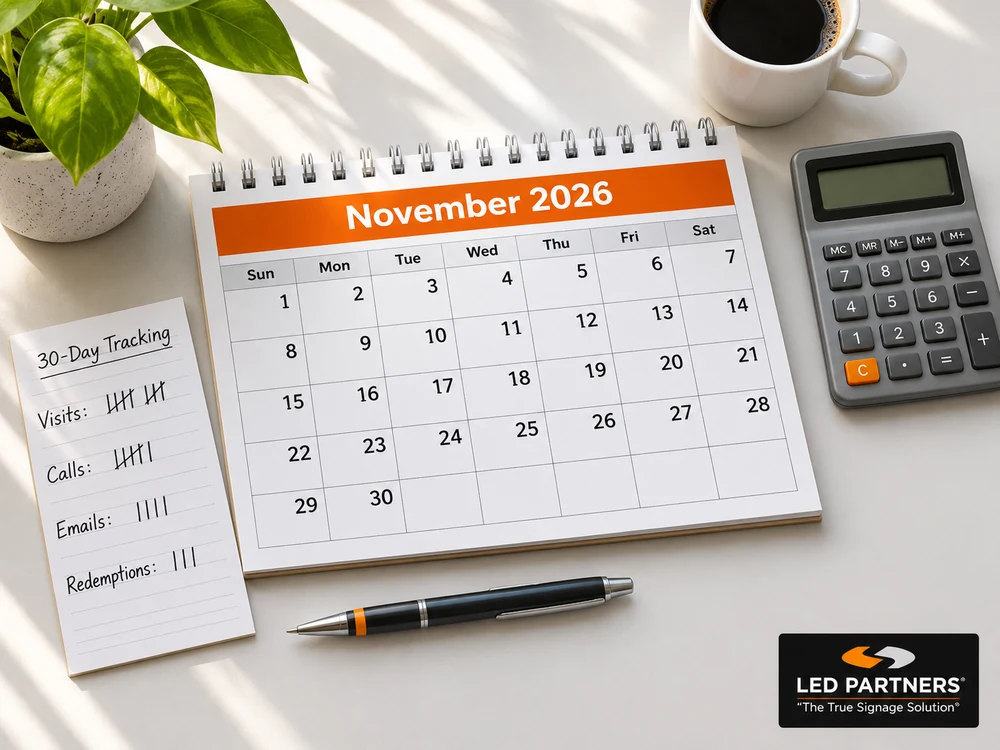
You don’t have to review every possible metric at once. A manageable tracking routine can help you understand your results without adding too much administrative work. Here’s a practical approach:
A good LED sign needs more than a great message; it also needs proper placement, clear visibility, and reliable performance. At LED Partners, we help businesses choose LED signage that fits their location, audience, and specific marketing goals.
Based in Houston, we offer custom outdoor LED signs, digital displays, installation, and content creation services. We also offer software training and ongoing technical support so you can confidently manage your display every day.
Your LED sign should do more than catch attention; it should help your business reach its goals. At LED Partners, we provide LED displays, content guidance, and technical support to help you make the most of your investment.
Contact LED Partners, today!