
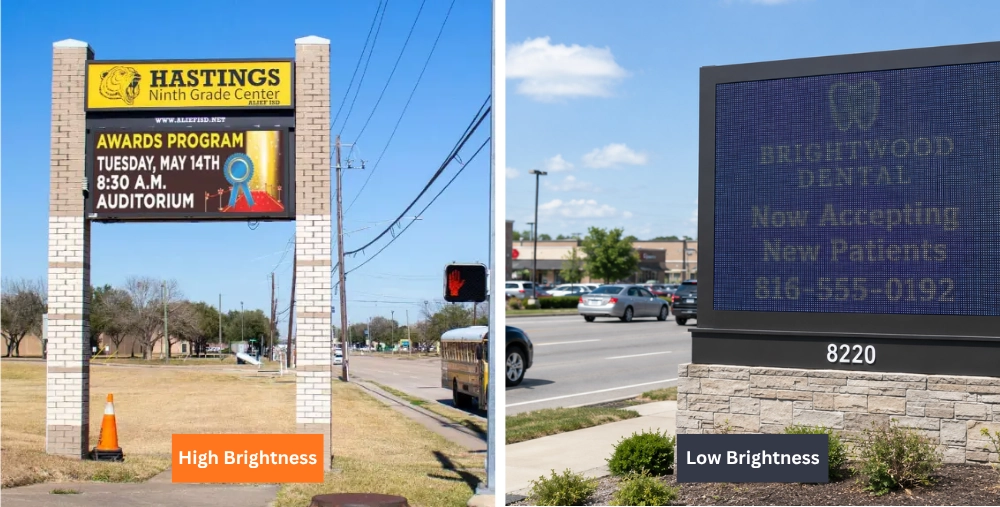
TL;DR: Outdoor LED signs stay visible in full sun when the display is bright enough, the message is simple, and the sign is installed where people can read it easily. Good planning also helps the sign perform well during the day, at night, and through changing weather.
An outdoor LED sign has to work when the sun is high, the road is busy, and people only have a few seconds to read it. If the screen is too dim, too cluttered, or placed at the wrong angle, the message can disappear even when the sign is turned on and working.
That is why full-sun visibility depends on more than brightness alone. A clear outdoor LED sign needs the right screen, smart placement, simple content, and steady support so people can see and understand the message without slowing down or squinting.
Key Takeaways
Brightness is one of the first things to check when choosing an outdoor LED sign because the screen has to compete with direct sunlight, reflections, and everything else happening around it. A display that looks sharp inside a showroom can look weak outside if it was not built for daylight use.
Brightness is measured in nits, and outdoor signs need a much higher nit level than indoor displays. The right level depends on the sign location, the direction it faces, how far away people will view it, and how much sun hits the screen during the day.
A sign that looks clear at noon should not blind people at night. Automatic dimming helps the display stay bright during the day and softer after dark, which is important for schools, churches, neighborhoods, medical offices, and community spaces.
This also helps the sign look more professional because the screen matches the light around it. Instead of running at full brightness all the time, the sign gives the right amount of light for the moment.
Brightness gets attention, but contrast makes the message readable. When text and background colors are too similar, the sign can look washed out in full sun. Clear contrast helps letters, numbers, and images stand out, so drivers, students, guests, tenants, and customers can understand the message quickly.
Outdoor LED content should use clean color choices that are easy to read from a distance. Bright text on a dark background often works well, while thin fonts, pale colors, and busy images can make the message harder to see.
Pixel pitch affects how sharp the sign looks from different distances. Choose it based on where people will view the display:
The smallest pixel pitch is not always worth the extra cost. A better choice depends on how people will actually view the sign:
Glare can make an outdoor LED sign hard to read, even when the screen is bright. Sunlight may reflect off glass, cars, pavement, buildings, or the display itself. Planning for glare before installation helps. The screen face, cabinet, height, angle, and location all affect how clear the sign looks in daylight.
A well-placed sign does not have to fight the sun as much. When the display is angled with traffic, sightlines, and sun exposure in mind, the message stays easier to read. Checking road speed, landscaping, nearby buildings, and viewer approach early also helps prevent visibility problems that are harder to fix after installation.
Even a high-quality outdoor LED sign can fail if the message is too long. Most people will only glance at the screen, so each slide should focus on one clear idea.
A strong message uses large text, short wording, and enough space between elements. Instead of placing a full list of dates, phone numbers, offers, and graphics on one screen, it is better to keep the message simple and rotate details across separate slides.
Movement can help the sign catch attention, but too much motion can make the message harder to read. Fast transitions, flashing effects, and busy animations may look fun in a preview, but they can be distracting from the road.
The best motion is simple and useful. It can guide the eye, separate messages, or add interest without making people work harder to understand what the sign says.
Outdoor LED signs face heat, rain, wind, humidity, dust, and daily wear. If the display is not built for those conditions, the sign may develop dim spots, moisture issues, or service problems that make the message look less clear.
A durable sign uses a strong cabinet, proper ventilation, sealed parts, reliable LED modules, and safe service access. These details may not stand out at first, but they help the sign stay bright, even, and dependable for years.
Every outdoor LED sign should be planned with maintenance in mind. Even a reliable display may need cleaning, inspection, repair, content help, or part replacement at some point.
When technicians can reach the sign safely and work on it efficiently, small issues are easier to fix. This matters for business owners, school teams, churches, restaurants, property managers, and anyone who depends on the sign every day.
LED Partners helps turn a sign idea into a finished display that fits the property, the audience, and the way people will see it each day. Their team can help with design, permitting, fabrication, installation, training, content, technical support, repair, and maintenance, so clients do not have to manage every step on their own.
LED Partners also works with businesses, schools, churches, restaurants, HOAs, medical centers, sports venues, municipalities, and multi-tenant properties. Their commercial outdoor signage solutions help clients choose displays that fit the site, message, and long-term use.
A sign that fades in full sun is not doing its job. The right outdoor LED sign should have strong brightness, clear contrast, the proper pixel pitch, smart placement, simple content, durable construction, and support you can count on.