
TL;DR: Planning a LED screen rental in Houston requires more than selecting a display. Audience size, venue layout, weather conditions, content quality, and technical support all play a role in creating a successful event experience.
Key Takeaways:
A successful event screen starts with understanding your audience, venue, content, and event goals rather than simply choosing equipment. Planning a LED screen rental in Houston early helps ensure the right setup for better visibility and engagement at any event.
The mistake many planners make is treating the LED screen like a giant television. In reality, it is part of the event infrastructure. It affects visibility, guest flow, sponsor value, stage design, safety, timing, and the way people remember the event after they leave.
Before comparing screen sizes, start with the people who will be watching it. A rental screen for a 150-person indoor meeting will not have the same needs as a community festival spread across a large outdoor space.
Consider where guests will be throughout the event, since audiences closer to the screen benefit more from clear visuals than a larger display, while larger, more visible screens are often necessary for distant viewers and venues with both seated and moving attendees.
Different events require different screen setups based on audience size, viewing distance, and content needs. Focus on what your audience needs to see, where they will be viewing from, and how the screen will support the event experience.
When evaluating a venue for an LED screen rental, it helps to separate your planning considerations based on whether the event is indoors or outdoors. Each environment presents unique challenges that can affect screen visibility, setup requirements, and overall performance.
A site walk helps verify access, staging areas, crew pathways, and venue restrictions before event day. It also gives you a chance to view the stage from different audience perspectives and ensure the screen will be visible from the areas where guests are most likely to gather.
Houston weather can change quickly, so outdoor LED screen setups should account for heat, humidity, rain, wind, and sunlight. These conditions can affect both screen visibility and the overall installation process.
Brightness is especially important during daytime events, while evening displays should remain clear without overpowering the audience or stage. Even with durable outdoor LED screens, weather planning for power, cabling, and equipment protection remains essential.
Weather conditions can affect screen placement and setup, especially for larger outdoor displays. For high-profile events, a backup plan helps ensure reliable performance in Houston’s unpredictable climate.
A large LED screen can attract attention, but it will not fix content that is blurry, hard to read, or poorly timed. Guests may not notice the technical setup, but they will quickly notice when the content looks unprofessional or difficult to follow.
Before the event, decide what content will appear on the screen and confirm the correct file formats, aspect ratios, and resolution requirements. Content that looks good on a laptop or phone may not display properly on a large LED screen, so test it beforehand.
For event screens, keep content simple with large text, strong contrast, clean layouts, and short messages that are easy to read from any distance. Sponsor slides should allow enough display time for logos and appear at appropriate moments without disrupting the program.
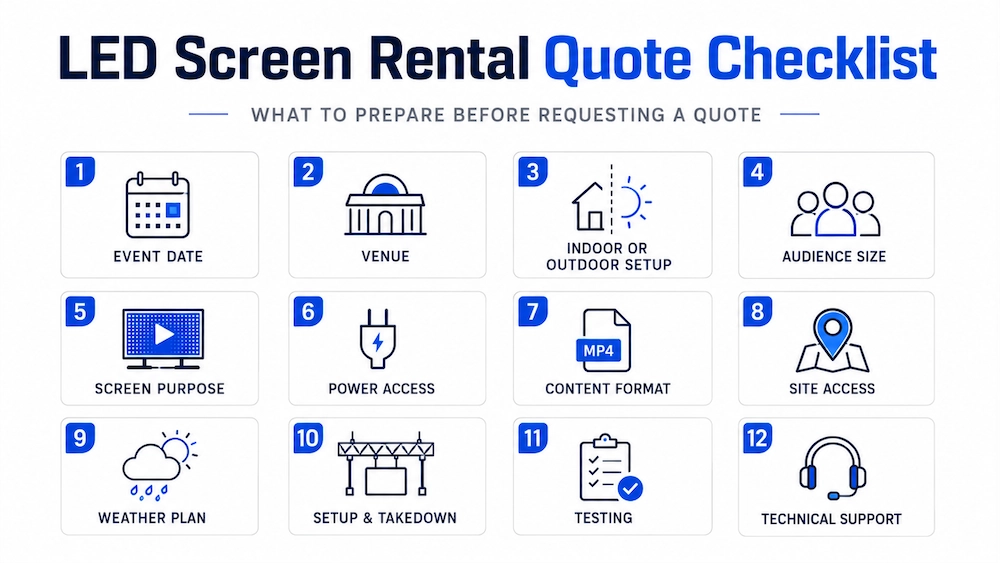
A clear quote starts with having the right event details ready before you reach out to a rental provider. Gather key information such as the event date, venue, audience size, screen purpose, and whether the setup will be indoors or outdoors.
If you have a stage layout or site map, include it to help the rental team understand the space. Providing complete details upfront makes it easier to recommend the right screen and speed up the planning process.
Not every LED screen rental includes the same level of support, so it is important to clarify exactly what is covered before booking. Ask the provider:
Start planning your LED screen rental four to six weeks before the event whenever possible. This gives you enough time to secure the right setup, coordinate logistics, and prepare content without rushing.
As the event approaches, finalize technical details, test all content, and confirm venue access, power, and weather plans. A simple timeline helps prevent last-minute issues and keeps everything running smoothly on event day.
Assign a single point of contact to manage screen-related decisions and coordinate with the rental team, venue, production crew, speakers, sponsors, and event staff. That person should manage schedules, approvals, and communications, so last-minute changes can be handled quickly.
Guests may not know the technical specs of an LED screen, but they will notice when content is hard to see or the display looks unprofessional. Poor visibility, distorted images, and delayed content can quickly affect the event experience.
Choosing a rental based only on price can lead to avoidable issues on event day. It is equally important to consider viewing distance, so the screen remains clear and effective for the entire audience.
Even if you are only renting a screen, consider how it works with your sound and lighting since bright stage lights, poor audio, or improper placement can reduce its effectiveness. The best event setups feel seamless, with the screen enhancing the program rather than competing for attention.
LED Partners helps Houston businesses, schools, churches, venues, and event organizers with LED screen rentals, digital signage, installation, and technical support. Their experience goes beyond simply providing a screen, helping ensure the display fits the event’s goals, audience, and venue.
Whether you need a temporary display for a special event or a customized rental solution, LED Partners offers a range of LED rental services designed to support different event types, audience sizes, and venue requirements. Their team can help choose the right screen and setup for your event.
Your screen should help the crowd see, follow, and remember the event. It should not become another stressful item on your planning list. Make your Houston event easier to see and harder to forget.