OUTDOOR SIGNS

Traditional Signage That’s Easy to Read, Hard to Ignore, and Built to Last

Not every site needs a screen. Traditional signage wins when you want a clean, permanent brand presence with minimal maintenance, fewer moving parts, and predictable long-term performance. The catch is that “traditional” doesn’t mean “simple.” If letter heights are wrong, contrast is weak, or placement is off, the sign fails even if the craftsmanship is perfect. Wayfinding standards and guidelines repeatedly stress that legibility comes down to letter size vs viewing distance, contrast, and non-glare finishes.

What We Mean by Traditional Signage

Traditional signage covers the core physical sign types that don’t rely on LED display content. This usually includes monument signs, pylon signs, building identification, tenant panels, and full wayfinding systems across a site. It’s the foundation signage that makes a property look established and navigable, even before you add anything digital.

Traditional Sign Types We Build

Monument Signs

Monuments create a premium, architectural entrance presence. They work best when the sign feels like part of the site, not an afterthought, and when the copy is legible for the approach speed and setback distance.

Pylon Signs and Tenant Panel Signs

Pylons are built for distance visibility. The biggest mistake landlords make is trying to give every tenant equal prominence, which turns the sign into a cluttered directory nobody can read fast enough. If drivers can’t understand it in seconds, it’s wasted frontage.

Building Identification and Wall Signs

This is where brand recognition is won or lost. A building sign has to read cleanly at the angles people actually approach from, not just in a straight-on elevation drawing.

Wayfinding and Directional Signage

This is the part that reduces complaints immediately. Legibility guidance consistently ties letter height to viewing distance, and formal standards show practical sizing relationships such as 10mm letter height for ~3m, 20mm for ~6m, 30mm for ~9m, and 50mm for ~15m viewing distances in a wayfinding context.

Design Rules That Make Traditional Signs Work

If you want signs that people can actually use, don’t guess. Use viewing-distance rules, keep contrast strong, avoid reflective glare, and keep messages short. Multiple guidelines stress contrast, matte/non-glare finishes, and sizing text to distance as baseline legibility principles.

When Traditional Signage Beats Digital

Traditional signage is often the better choice when zoning restrictions are tight, budgets need to be controlled, the message doesn’t change often, or you want a clean architectural look with minimal ongoing management. Digital can be powerful, but it also adds operational responsibility. If nobody owns updates, screens go stale. Traditional signage doesn’t have that failure mode.
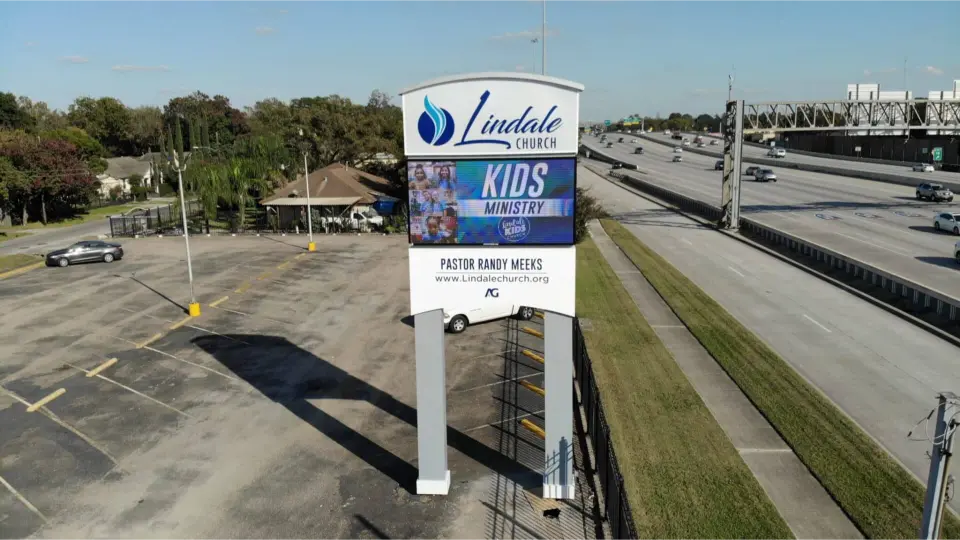
Lindale Church Led Outdoor Signage

Project Samples

Frequently asked questions

Use viewing distance as the driver. Formal wayfinding standards show direct relationships between distance and letter height (for example, 50mm for ~15m, 30mm for ~9m in a typical wayfinding sizing guide).

Hierarchy. Limit the number of primary tenant callouts, group the rest logically, and size everything for road distance and approach angles.

Sometimes, yes. If your message is stable, you want minimal upkeep, or local rules restrict digital signage, traditional often delivers the best ROI. If you need frequent updates, digital may be the better fit.

Want signage that looks professional and reads clearly from the right distance?

Tell us where the sign will sit, how fast people are moving when they see it, and what the sign needs to accomplish (identity, tenants, wayfinding, compliance). We’ll recommend the right sign type and size so you don’t end up with a beautiful sign that nobody can read.
SOLUTIONS
SERVICES
AREAS WE SERVE
  • Houston
  • Dallas
  • Austin
  • San Antonio
INDUSTRIES
  • Retail & Shopping Centres
  • Restaurants
  • Petrol / Service Stations
  • Multi-tenant Commercial Property
  • Education
  • Sports Venues
  • Churches
  • View All Industries
Copyright © 2026 LED Partners