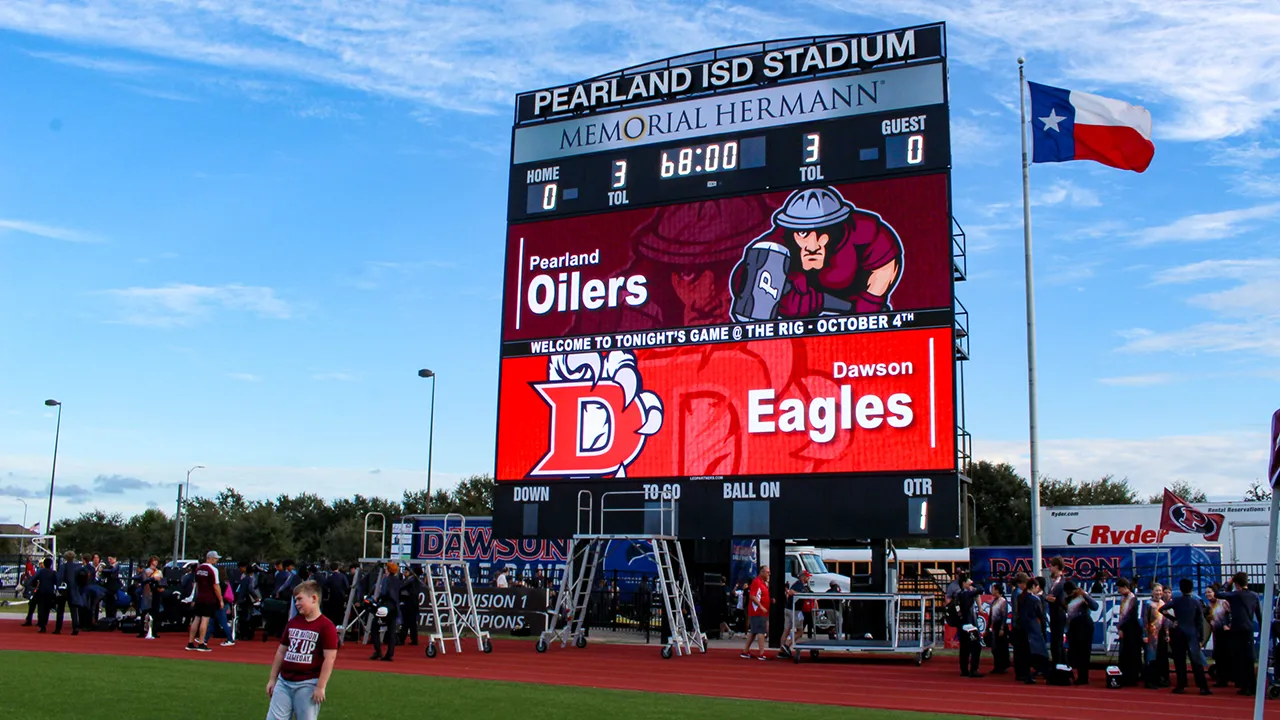
Outdoor Video Scoreboards Built for Full Sun, Fast Reads, and Game-Day Control
A video scoreboard is only “awesome” when it works every time. That means daylight readability, weather resistance, and a control setup your staff can actually run under pressure. Outdoor videoboards are also one of the cleanest ways to turn game-day attention into sponsor revenue, because you can zone content for ads, prompts, replays, and the score all at once.
You’re not buying a bigger scoreboard. You’re buying a multi-purpose screen that can handle:
Live video and instant replay (when configured for it)
A virtual scoreboard layout plus sponsor ads on the same screen
Player intros, hype prompts, crowd engagement, and event messaging
Multi-sport flexibility (football, soccer, lacrosse, etc.) with different layouts by sport
Popular Outdoor Videoboard Configurations
Full Videoboard With Virtual Scoreboard
Best when you want one clean canvas that can display score/clock and rotate sponsor content around it (or in split zones). Watchfire case studies show this style being zoned for virtual scoreboard + live video + sponsor advertising.
Hybrid: Videoboard + Fixed-Digit Scoreboard
Common when you want the traditional fixed digits for instant readability plus the videoboard for hype, sponsors, and replays. Procurement/spec docs often show packaged layouts in this style.
End-Zone or Outfield Videoboards
Football/soccer end-zone boards and baseball/softball outfield boards are usually specced differently because viewing distance and angles change.
Control Room and Game-Day Workflow
This is where most schools and venues get stuck: the board is impressive, but running it feels like a cockpit.
Sponsorship Revenue That Helps Pay for the Board
Video scoreboards are routinely sold on sponsor inventory: rotating ads, sponsor bumpers, “player of the game,” and event messages. Vendors explicitly frame videoboards as a way to “maximize sponsor exposure while generating revenue.”
Specs That Actually Decide Performance
Brightness for Sunlight
Outdoor video displays are commonly specced at very high brightness. For example, Daktronics publishes calibrated intensity figures like 10,000–12,000 nits on certain outdoor display lines.
Weather Protection and Durability
Look for clear ingress protection guidance. Daktronics’ outdoor display specs list IP-66 components and temperature ratings down to -40°C on certain models.
LED Life and Serviceability
Outdoor videoboards are long-life assets when maintained properly. Published specs often cite 100,000+ hour LED lifetime on some lines, plus front-service options depending on the product.
Refresh Rate and Camera Friendliness
If your crowd films your board (they will), low refresh can look terrible on phones. Watchfire has explicitly positioned newer 10mm sports displays around faster refresh so photos/videos don’t flicker or blur.
Our Process
Site assessment (viewing distance, sun, mounting, wind load)
Recommended size + pixel pitch range (based on real sightlines)
Engineering + installation plan (including power/data runs)
Control room setup + training
Launch support and ongoing service
Project Samples
Frequently asked questions
Start with viewing distance. Many outdoor videoboards sit in pitch ranges such as ~10mm for stadium-style viewing, with larger pitches used for longer distances, but the right answer comes from your exact sightlines.
Bright enough to stay readable in direct sun. Some published outdoor videoboard specs cite calibrated intensity in the 10,000+ nit range for certain models.
Yes. Zoning the screen for a virtual scoreboard plus sponsor areas is a common setup and is explicitly described in vendor examples.
Want an outdoor video scoreboard that’s bright in daylight and easy to run on game day?
Send your field type, approximate viewing distance, and whether you need live video/instant replay. We’ll recommend a spec that matches your venue and your staffing, then build a control workflow that won’t fall apart mid-season.