Indoor Video Scoreboards That Look Sharp Up Close and Don’t Fail on Game Day
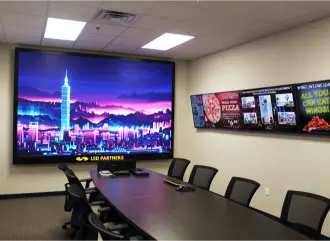
A gym videoboard only delivers value if two things are true: it’s clear from the bleachers and it’s simple to run under pressure. Modern indoor video scoreboards are designed for live video, replays, game info, and sponsor zones, with pixel pitches built for closer viewing than outdoor boards.
Indoor videoboards aren’t just “bigger scoreboards.” The good ones are built to handle:
Live video + instant replays
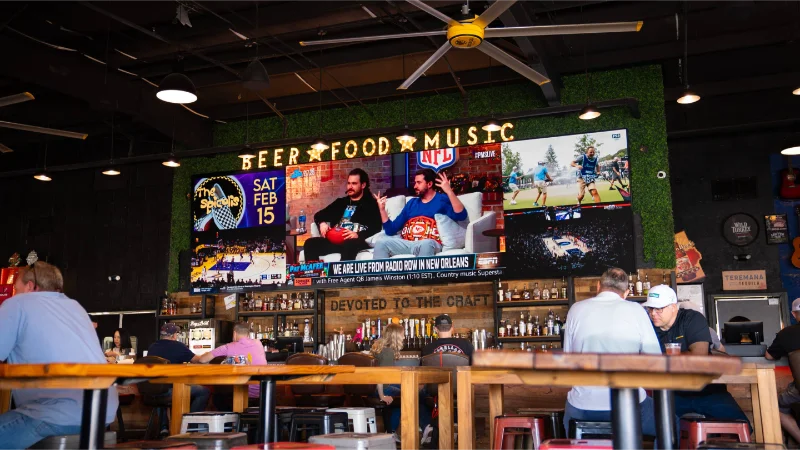
A virtual scoreboard layout plus sponsor ads on the same screen (zoned content)
Player intros, hype prompts, animations, and event content (graduations, assemblies, concerts)
Common Indoor Videoboard Configurations
Main End-Wall Videoboard
The classic setup for most school gyms. Optimised for bleacher viewing and multi-sport layouts.
Center-Hung Displays (when you want premium impact)
Best for larger facilities where you want viewing from all angles.
Scorer’s Table + Ribbon Add-Ons
Indoor ribbons are often used to extend sponsor inventory and game prompts around the venue; vendors list multiple indoor ribbon pitches (e.g., 3.9mm, 5.9mm, 10mm, 15mm) depending on distance.
Pixel Pitch and Viewing Distance
Indoor boards are close-view products. Watchfire positions indoor scoreboard resolutions from 0.9mm to 5.9mm, which tells you the category expects near-range clarity. A practical rule is to spec pitch based on where most viewers sit, not the “best seat.” Some industry guidance pegs ~4–5mm as common for indoor scoreboards/scorer’s tables and larger indoor gyms (distance-dependent).
Brightness, Refresh Rate, and Why It Matters Indoors
Indoor videoboards aren’t competing with sunlight, but they are competing with house lighting and glare. Published indoor sports display specs commonly sit around ~1,500 nits for certain indoor lines, with refresh rates like 3840 Hz cited in product specs.
Control Software and Game-Day Workflow
This is where projects succeed or die. Vendors like Nevco explicitly sell their indoor video displays with control software built around playlists, “hot buttons,” zoning, and integrations with common stat/timing tools.
Sponsorship Zones That Actually Pay for the Board
Indoor videoboards are prime sponsor real estate because you can keep the scoreboard visible while rotating ads and prompts. Vendors repeatedly position indoor displays as a way to create sponsorship inventory and revenue.
Brightness, Refresh Rate, and Why It Matters Indoors
Indoor videoboards aren’t competing with sunlight, but they are competing with house lighting and glare. Published indoor sports display specs commonly sit around ~1,500 nits for certain indoor lines, with refresh rates like 3840 Hz cited in product specs.
It depends on viewing distance. Indoor scoreboard vendors offer fine pitches (Watchfire lists 0.9–5.9mm), and many planning guides put ~4–5mm in the “common indoor gym” range when distances suit it.
Yes. Zoning is a standard feature in indoor videoboard platforms, letting you run a virtual scoreboard layout while rotating sponsor content.
Indoor sports display specs often cite brightness around ~1,500 nits for certain product lines, with higher/lower depending on model and environment.
Want an indoor video scoreboard that’s clear from the stands and easy to run?
Send your gym dimensions, typical viewing distance, sports played, and whether you want live video/replay. We’ll recommend the right pitch and layout, then set up a control workflow your staff can operate confidently.